Is Google Voice HIPAA Compliant? What Therapists Need to Know
Is Google Voice HIPAA compliant for your private practice? Learn the real risks, BAA limits, and safer ways to message and coordinate care with providers.
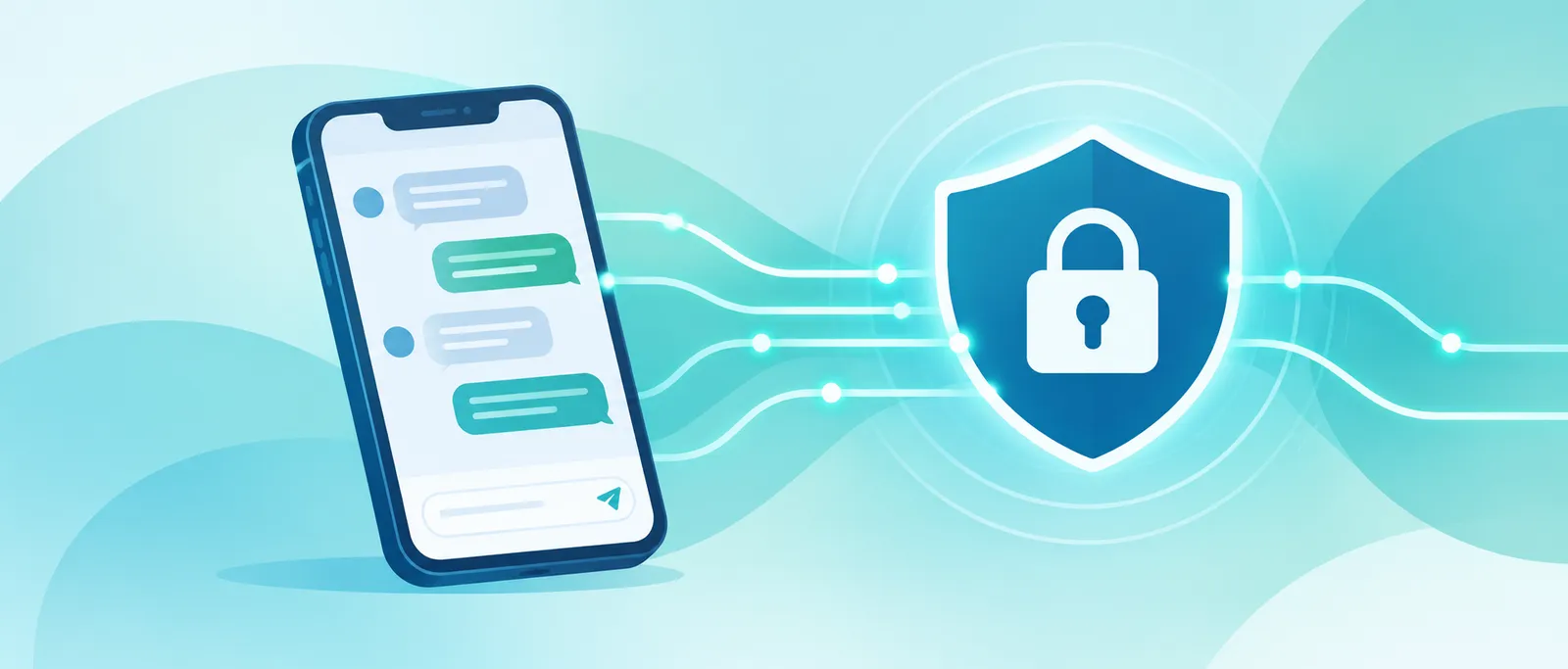
If you run a solo or small behavioral-health practice, you've probably wondered whether a free, familiar tool like Google Voice is "good enough" for calling and texting patients. It's a fair question — and the honest answer deserves more than a checklist written for a corporate IT department.
Here's a plain-language look at where Google Voice stands with HIPAA, what the real risks are for a small practice, and why "technically compliant" still doesn't solve the bigger problem most therapists are actually facing.
Short answer: Is Google Voice HIPAA compliant?
Not by default.
- Free, consumer Google Voice is not HIPAA compliant. Google does not sign a Business Associate Agreement (BAA) for the free consumer version, and without a BAA you can't use it to handle protected health information (PHI).
- Google Voice through Google Workspace can be configured toward compliance — but only with a signed BAA and the right settings in place. Even then, the BAA may not cover every Voice feature, so it isn't a blanket green light. (HIPAA Included Functionality)
So the practical takeaway for most private-practice therapists: the version of Google Voice you probably already have on your phone is not a compliant way to communicate PHI, and the paid path requires deliberate setup that's easy to get wrong without IT support.
Why this question matters for private-practice therapists
Unlike a large clinic with a compliance officer, most therapists are making these decisions alone, between sessions. The day-to-day reality looks like:
- Texting a client to confirm or reschedule an appointment
- Returning a call and leaving a voicemail
- Fielding a message that unexpectedly includes sensitive clinical detail
Any of those can involve PHI — sometimes before you realize it. A client's name tied to the fact that they're your patient is already protected information. That's why the tool you use for routine communication isn't a minor convenience choice; it's a part of your practice's privacy posture.
What HIPAA actually requires from a phone/texting tool
At a high level, HIPAA expects that any third-party tool handling PHI on your behalf is covered by a Business Associate Agreement — a contract where the vendor agrees to safeguard that information and accept responsibility for it. No BAA, no compliant use for PHI, full stop.
Beyond the BAA, you're generally looking for:
- Encryption of data in transit and at rest
- Access controls so only authorized people can see messages
- Audit logging so activity can be traced
- Reasonable safeguards around how data is stored and retained
This is a general overview, not legal advice, and the specifics of your obligations can depend on your state and your situation. When in doubt, confirm with a compliance professional before relying on any tool.
Free Google Voice vs. Google Voice through Google Workspace
It's easy to blur these two together because they share a name, but they're different products for HIPAA purposes.
- Free (consumer) Google Voice: Not covered by a BAA. Not appropriate for PHI.
- Google Voice through Google Workspace: Google offers a BAA to covered Workspace customers, and Voice can fall under that agreement when properly configured. However, Google's BAA has historically carved out certain features, and the scope changes periodically — so you can't assume every Voice capability is covered. You'd need to review Google's current BAA terms and confirm which features are in or out before using them for PHI.
Because these terms shift over time, treat any blog post (including this one) as a starting point and verify against Google's current documentation and your own compliance review.
Is Google Voice encrypted? Is it end-to-end encrypted?
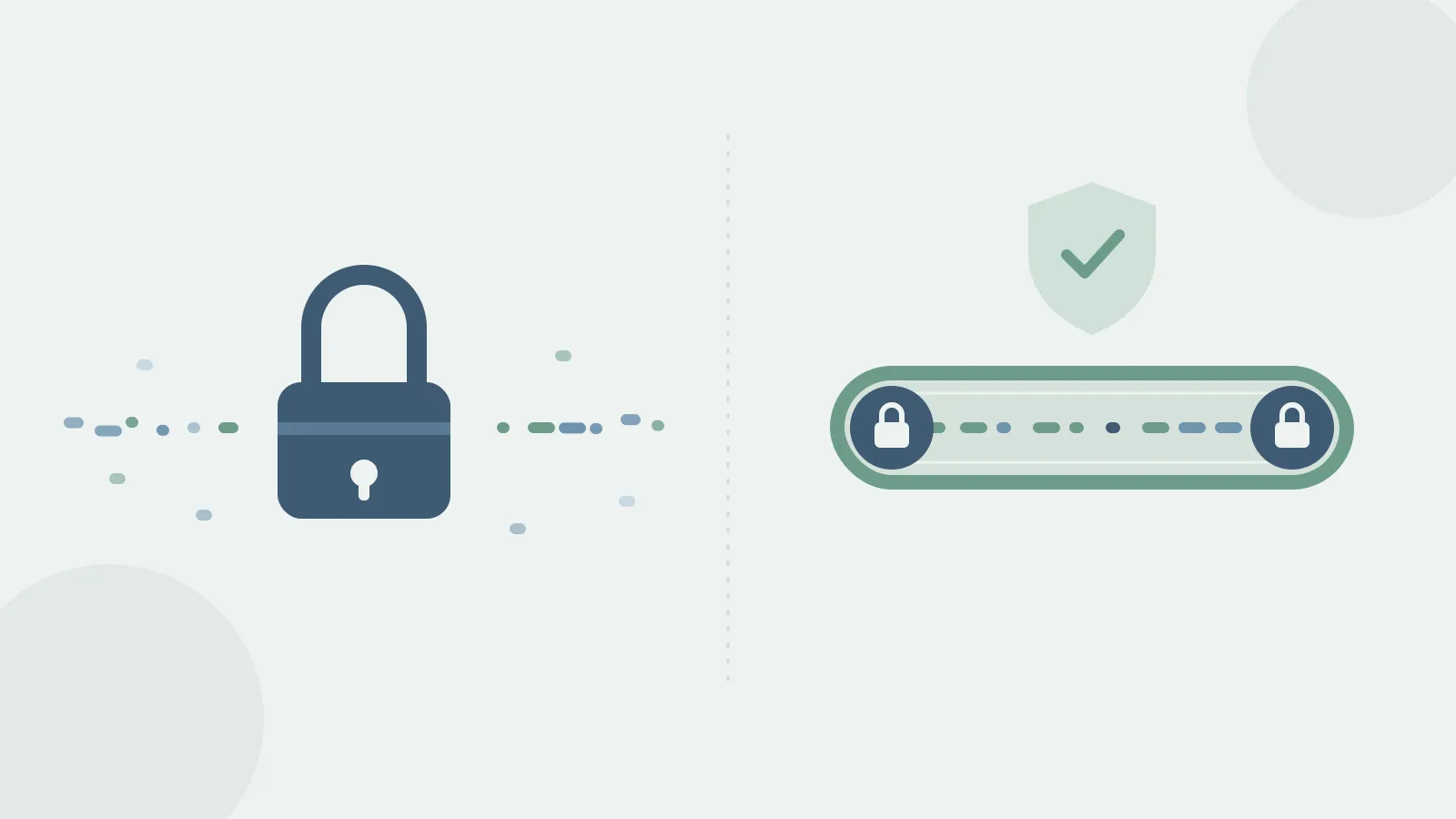
Encryption in transit is not the same as end-to-end encryption.
Short answer: Google Voice uses encryption to protect data in transit and at rest, like most Google services. That's meaningful security — but it's not the same as end-to-end encryption.
End-to-end encryption means only the sender and recipient can read the content, and the provider itself cannot. Google Voice is not end-to-end encrypted in that sense; the platform can access the content it transmits and stores. For HIPAA purposes, the presence of encryption doesn't substitute for a BAA — you still need the contractual relationship in place, regardless of how data is encrypted.
In other words, "is it encrypted?" and "is it HIPAA compliant?" are two different questions. A tool can be encrypted and still not be an acceptable way to handle PHI.
Common risky habits: personal cell phones, texting, and photos
A few of the most common questions therapists ask — answered conservatively:
- Is using a personal cell phone a HIPAA violation? Not automatically. Using a personal device isn't inherently prohibited, but doing so without reasonable safeguards (device locking, encryption, controlling who can see notifications and messages) can create real exposure. Many practices adopt a written policy rather than leaving it to chance.
- Is it illegal to give a patient your phone number? Sharing your number isn't illegal. The risk comes from how communication then happens — unsecured texts containing PHI are the concern, not the act of being reachable.
- HIPAA and cell phone pictures: Photos that contain PHI (including images that identify a patient) stored on a personal device, synced to a consumer cloud, or sent over standard texting can be a serious vulnerability. Avoid capturing PHI on personal camera rolls.
Whether a specific behavior counts as a violation depends on context, safeguards, and your state's rules. Don't treat any of the above as a legal determination — confirm your policies with a compliance professional.
Even "compliant" isn't the same as "coordinated"

Compliance solves one patient at a time; coordination connects the whole care team.
Here's what the generic compliance checklists miss.
Suppose you do everything right — Workspace BAA signed, settings locked down, logging on. You've now solved the question "can I legally text this patient?" But you haven't touched the harder, more common problem:
Your patient's care is still fragmented.
A phone-and-texting tool keeps your communication siloed with one patient at a time. When you need to loop in a psychiatrist managing medication, a primary care physician, or the provider who referred the patient to you, Google Voice does nothing to help. You're back to phone tag, faxed releases, and hoping the right information reached the right person.
That gap — therapists unable to securely coordinate with the rest of a patient's care team — is the real cost of fragmented care, and no amount of configuring a consumer phone app fixes it.
What to look for in a HIPAA-compliant communication tool for behavioral health
When you evaluate options, look past "is it encrypted" and ask:
- Is a BAA included and straightforward, not an afterthought you have to hunt for?
- Is it built for care coordination, not just one-off messages to a patient?
- Can you securely share documents and referrals with other providers?
- Is it simple enough for a solo practice to run without an IT department?
- Is it designed for behavioral health specifically, not a generic clinic workflow?
That last point matters. Behavioral-health coordination has its own sensitivities, and a tool built with that context in mind fits your practice better than one retrofitted from a general business phone system.
How Patient Care Circle approaches this differently
Patient Care Circle (PCC) isn't trying to be "another HIPAA-compliant phone app." It's built for a different job: reducing fragmented care by improving provider-to-provider communication around shared patients.
Instead of leaving your patient communication siloed, PCC gives private-practice therapists a secure way to:
- Message other providers involved in a patient's care through a shared care circle
- Share documents and referrals securely
- Coordinate without the phone tag, faxes, and guesswork that fragment care
It's built specifically for behavioral health and simple enough for solo practices — so the goal isn't just checking a compliance box, it's actually connecting the people responsible for a patient's care.
Disclaimer
PCC is a communication tool and not a substitute for clinical judgment or emergency services. This article is general information, not legal or compliance advice.
FAQ
Are Google products HIPAA compliant? Some Google Workspace services can be used in a HIPAA-compliant way when you have a signed BAA with Google and configure them correctly. Free consumer Google products generally are not covered. Compliance depends on the specific product, the BAA scope, and your setup.
What is the downside of Google Voice? For a therapist, the main downsides are that the free version isn't covered by a BAA, the paid version requires careful configuration and may exclude some features, and — even when set up correctly — it keeps patient communication siloed instead of helping you coordinate with other providers.
Which cloud storage service is HIPAA-approved? No service is "HIPAA-approved" in an official sense. A service can be used compliantly if the vendor signs a BAA and you configure and use it appropriately. Confirm the BAA and settings with a compliance professional before storing PHI anywhere.
Is there a better option than Google Voice? For the narrow task of a compliant business line, several healthcare-focused phone tools exist. But if your real need is reducing fragmented care and coordinating with other providers, a purpose-built care-coordination tool like Patient Care Circle addresses a problem a phone app doesn't.
Is Google Voice encrypted? Yes, it uses encryption in transit and at rest — but encryption alone doesn't make it HIPAA compliant.
Is Google Voice end-to-end encrypted? No. Google Voice is not end-to-end encrypted; the platform can access the content it transmits and stores.
Is using a personal cell phone a HIPAA violation? Not automatically, but using one without reasonable safeguards can create exposure. Many practices adopt a written device policy. Confirm specifics with a compliance professional.
Is it illegal to give a patient your phone number? No. The risk lies in how communication happens afterward — unsecured texts containing PHI, not the act of sharing your number.
Can I text patient information using Google Voice? Not with the free version. With Google Workspace under a BAA and proper configuration it may be possible, but you'd need to confirm current BAA scope and settings first.
Frequently asked questions
Are Google products HIPAA compliant?
Some Google Workspace services can be used in a HIPAA-compliant way when you have a signed BAA with Google and configure them correctly. Free consumer Google products generally are not covered. Compliance depends on the specific product, the BAA scope, and your setup.
What is the downside of Google Voice?
For a therapist, the main downsides are that the free version isn't covered by a BAA, the paid version requires careful configuration and may exclude some features, and even when set up correctly it keeps patient communication siloed instead of helping you coordinate with other providers.
Which cloud storage service is HIPAA-approved?
No service is officially HIPAA-approved. A service can be used compliantly if the vendor signs a BAA and you configure and use it appropriately. Confirm the BAA and settings with a compliance professional before storing PHI.
Is there a better option than Google Voice?
For a compliant business line, several healthcare-focused phone tools exist. But if your real need is reducing fragmented care and coordinating with other providers, a purpose-built care-coordination tool like Patient Care Circle addresses a problem a phone app doesn't.
Is Google Voice encrypted?
Yes, it uses encryption in transit and at rest, but encryption alone doesn't make it HIPAA compliant.
Is Google Voice end-to-end encrypted?
No. Google Voice is not end-to-end encrypted; the platform can access the content it transmits and stores.
Is using a personal cell phone a HIPAA violation?
Not automatically, but using one without reasonable safeguards can create exposure. Many practices adopt a written device policy. Confirm specifics with a compliance professional.
Is it illegal to give a patient your phone number?
No. The risk lies in how communication happens afterward, such as unsecured texts containing PHI, not the act of sharing your number.
Can I text patient information using Google Voice?
Not with the free version. With Google Workspace under a BAA and proper configuration it may be possible, but you'd need to confirm current BAA scope and settings first.